
Journal
When Cold Air Hurts a Tooth
November 10, 2026·4 min read·Melton Dental
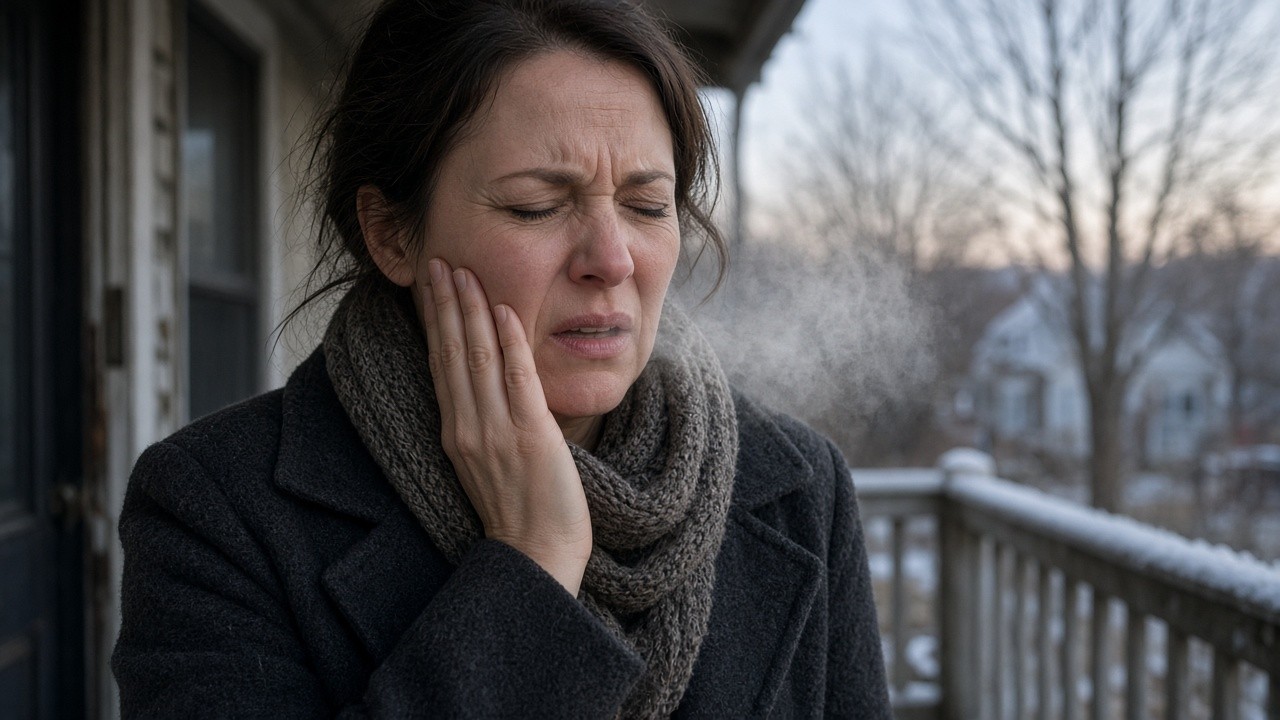
A walk outside in November can be enough. Cold air hits a tooth, and you get a sharp zing that fades in a second. That sting is worth a look before winter settles in.
The first hard freezes make this easy to notice. You step from a warm car into the air, or you take a sip of coffee and then breathe in, and one tooth answers. It can be a single spot. It can be several teeth along the gumline. Either way, the tooth is less protected than it was in summer.
What the Sting Usually Points To
Enamel is the hard outer layer. Under it is dentin, which has tiny channels that lead toward the nerve. When enamel is worn thin, or when the gum has pulled back and left the root showing, cold reaches those channels and the tooth fires.
A short zing that stops when the cold stops is the usual pattern for that kind of sensitivity. A sting that lingers, throbs after the air is gone, or hurts when you bite down and let go can be something else: a crack, a filling that no longer seals, or decay close to the nerve. You do not have to sort those apart on the porch. The pattern is what we need to hear.
Cold Air, Cold Water, and Hot Coffee
The trigger matters. Air on a windy walk, ice water, and a sweet dessert can all set off the same tooth. So can a hot drink followed right away by something cold. If only one tooth does it, and only when you bite, say that. If a whole side zings when you breathe in, say that too.
A dry mouth makes it feel worse. Furnaces run in November, and saliva is what normally coats the teeth. If you wake with a dry mouth, or you breathe through your mouth on a cold walk, the teeth have less of that coating when the air hits them.
What Helps This Week
Use a soft toothbrush and a toothpaste made for sensitive teeth, and give it a couple of weeks of steady use. Scrubbing harder does not make the zing stop. It can wear the gumline further and make the next cold morning worse.
Skip ice, and do not hold a cold drink against that tooth. If a walk sets it off, breathe through your nose or pull a scarf up for the first minute outside. If a sour candy or a whitening toothpaste is in the routine, pause those until the tooth is quiet. Acid and gritty pastes keep the surface open.
Rinse with plain water after coffee or juice. If you just had something acidic, wait a little before brushing so you are not scrubbing enamel that the acid has softened.
When It Is More Than a Zing
Call if the pain stays after the cold is gone, if the tooth wakes you at night, if the gum swells, or if biting down and releasing is the part that hurts. Those are not ordinary sensitivity until someone has looked.
A sharp edge, a spot that feels different to the tongue, or a tooth that hurts after a hard bite belongs in the same call. A small crack can feel like cold sensitivity for weeks and then split further on a nut or a crust. If you are unsure whether it can wait, treat it as a dental emergency and call the same day.
Look While the Calendar Still Has Room
A cleaning and exam is often enough to see whether the cause is wear at the gumline, a root that is showing, or a tooth that needs a repair. Toothpaste for sensitive teeth can calm a worn spot. It cannot seal a crack or replace a filling that has leaked.
Starting in November means you are not trying to sort this out in the week of Thanksgiving, when cold air, hot drinks, and crusty bread are on the same table. If the tooth can safely wait, we will say so. If it cannot, there is still time to do something about it before the holidays fill the days.
Get the Tooth Checked
You do not need a diagnosis before you call. Tell us which tooth, what sets it off, and whether the feeling stops in a second or stays. That is enough to start.
Call Melton Dental at 406-521-1324 for an appointment in Helena, MT. You can also schedule online.